Letterform
Balzac
A fatface
brought forward
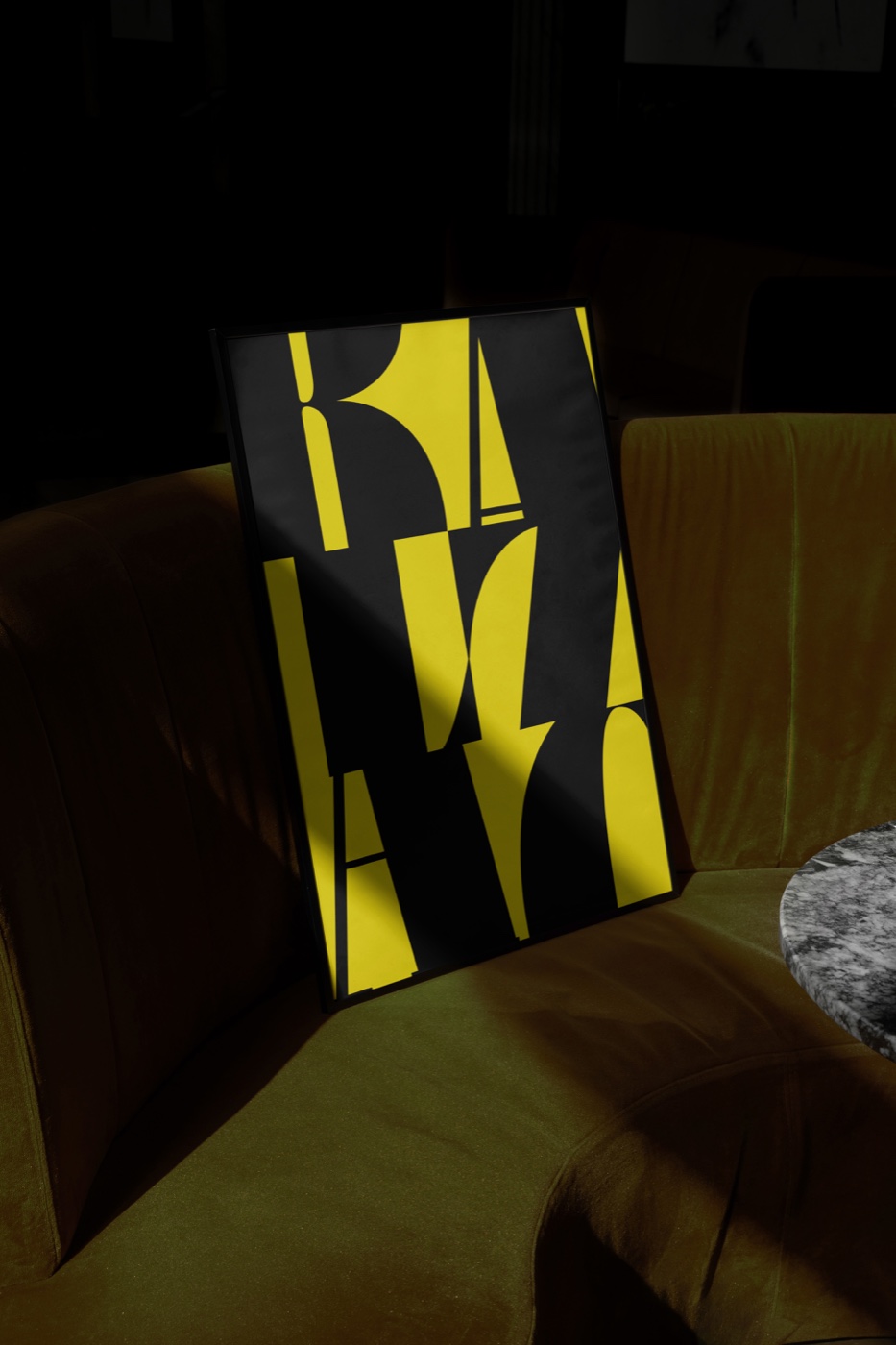
Balzac is a revival of a 1921 specimen from the French foundry Deberny & Cie. The original fatface ran two weights, and the surviving specimen showed only a third of the character set, so most of the face had to be reasoned back from what little was on the page. Carrying it into the present meant more weights and italics, drawn to hold up on screen as well as in print. Glyphs and ligatures were built out, and diacritic forms were added so the face can set more languages than the original ever had to.
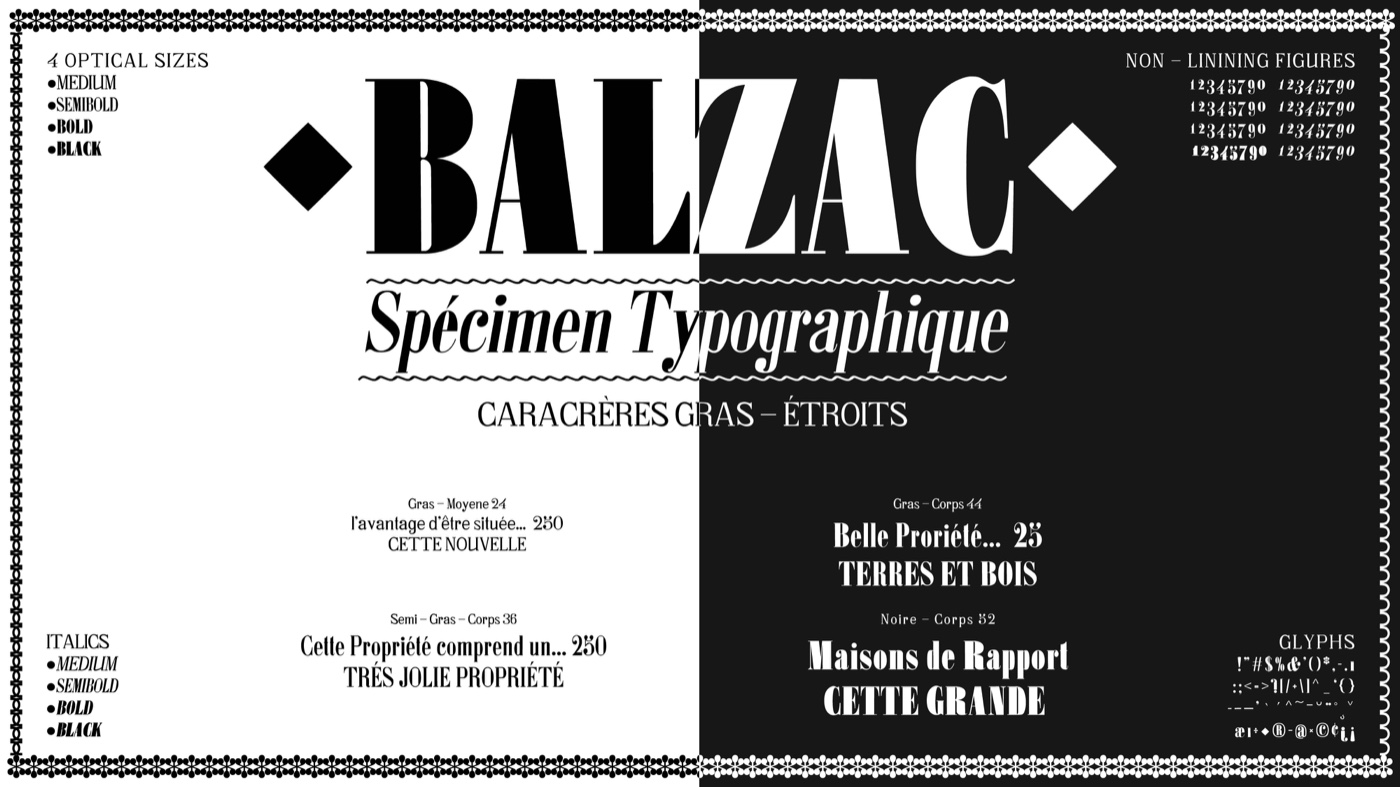
Four weights, eight styles
Medium, Semibold, Bold and Black, each with a matching italic.
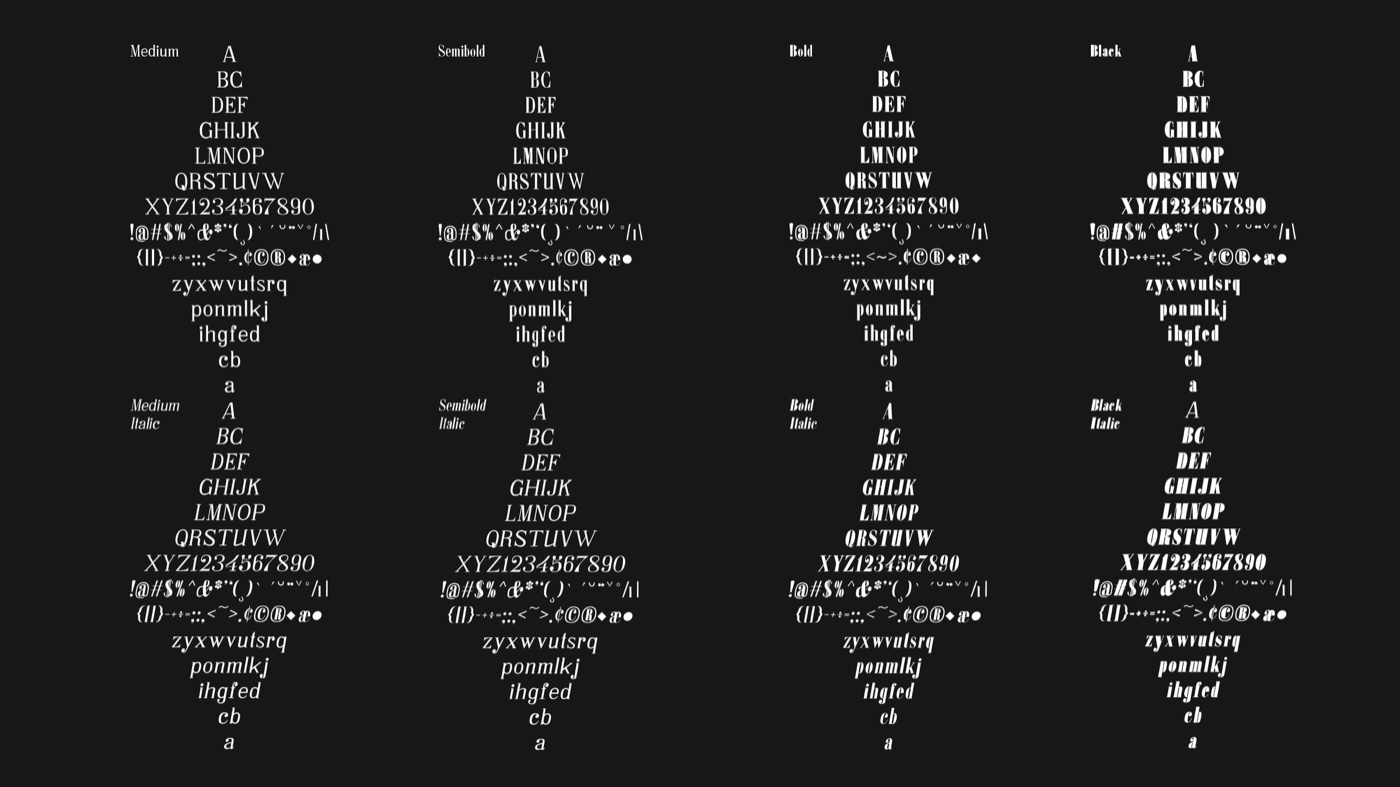
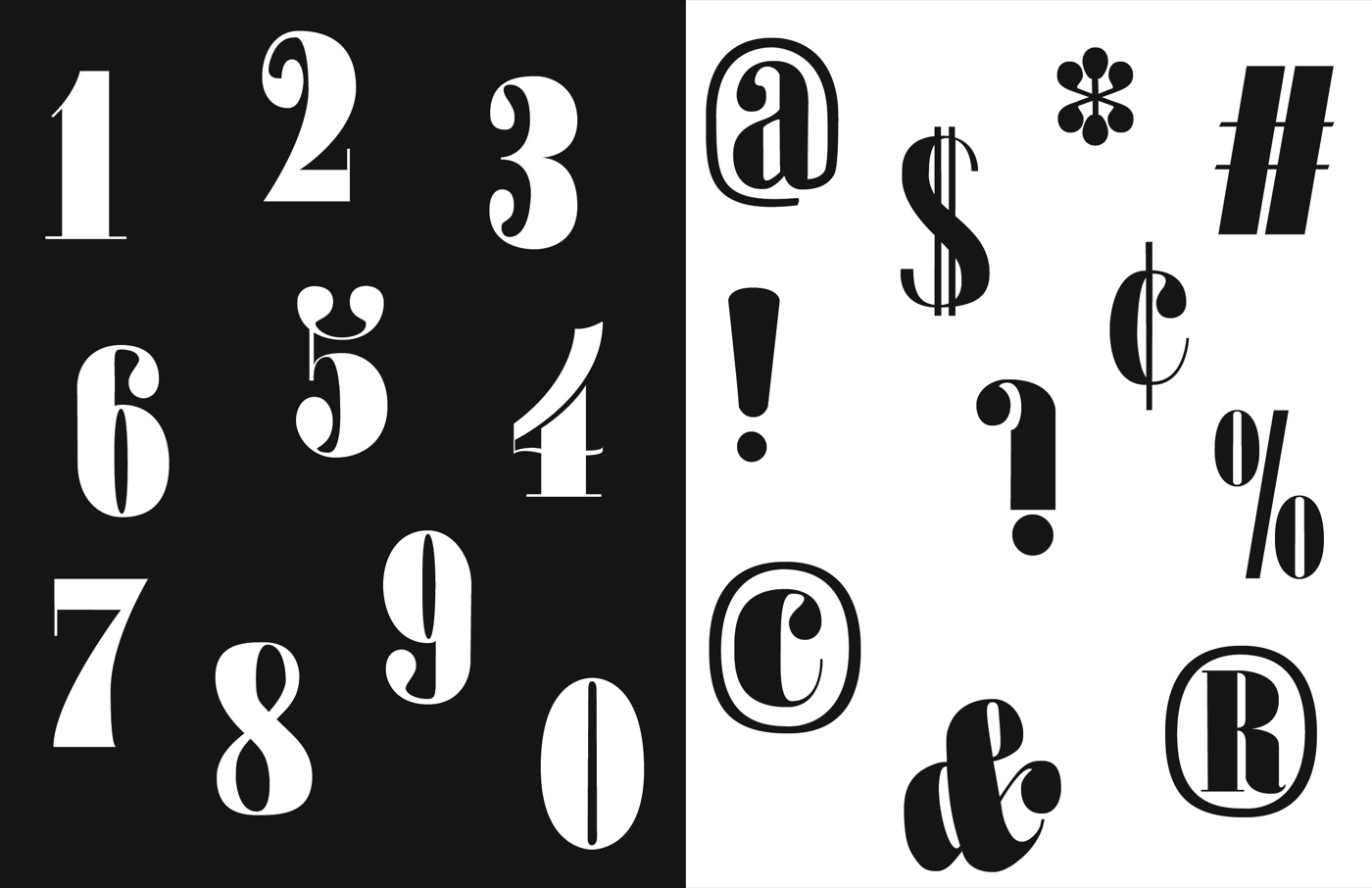
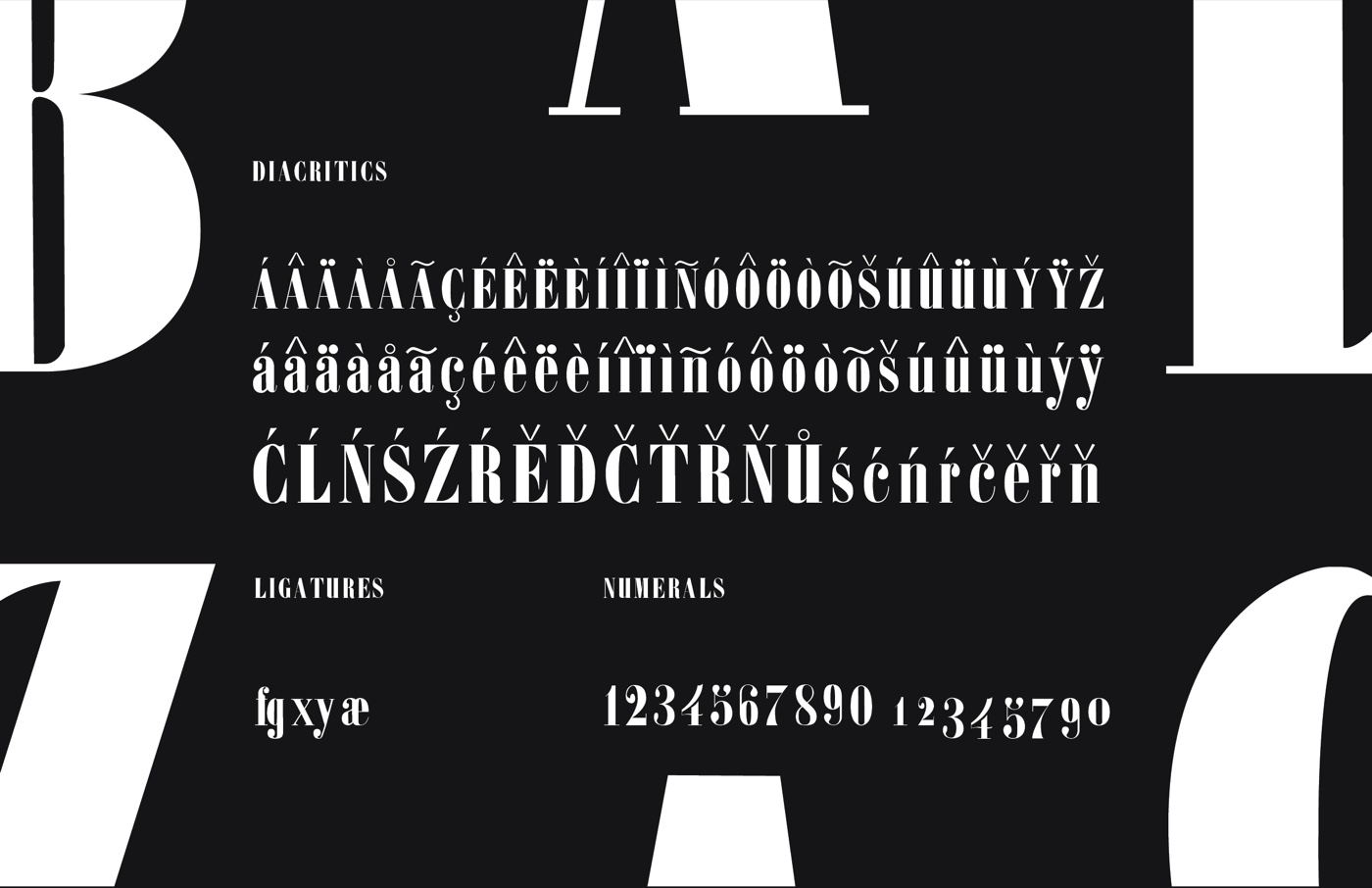
Filling out the set
Glyphs and ligatures built for the screen, and diacritics the 1921 original never carried.
Setting text
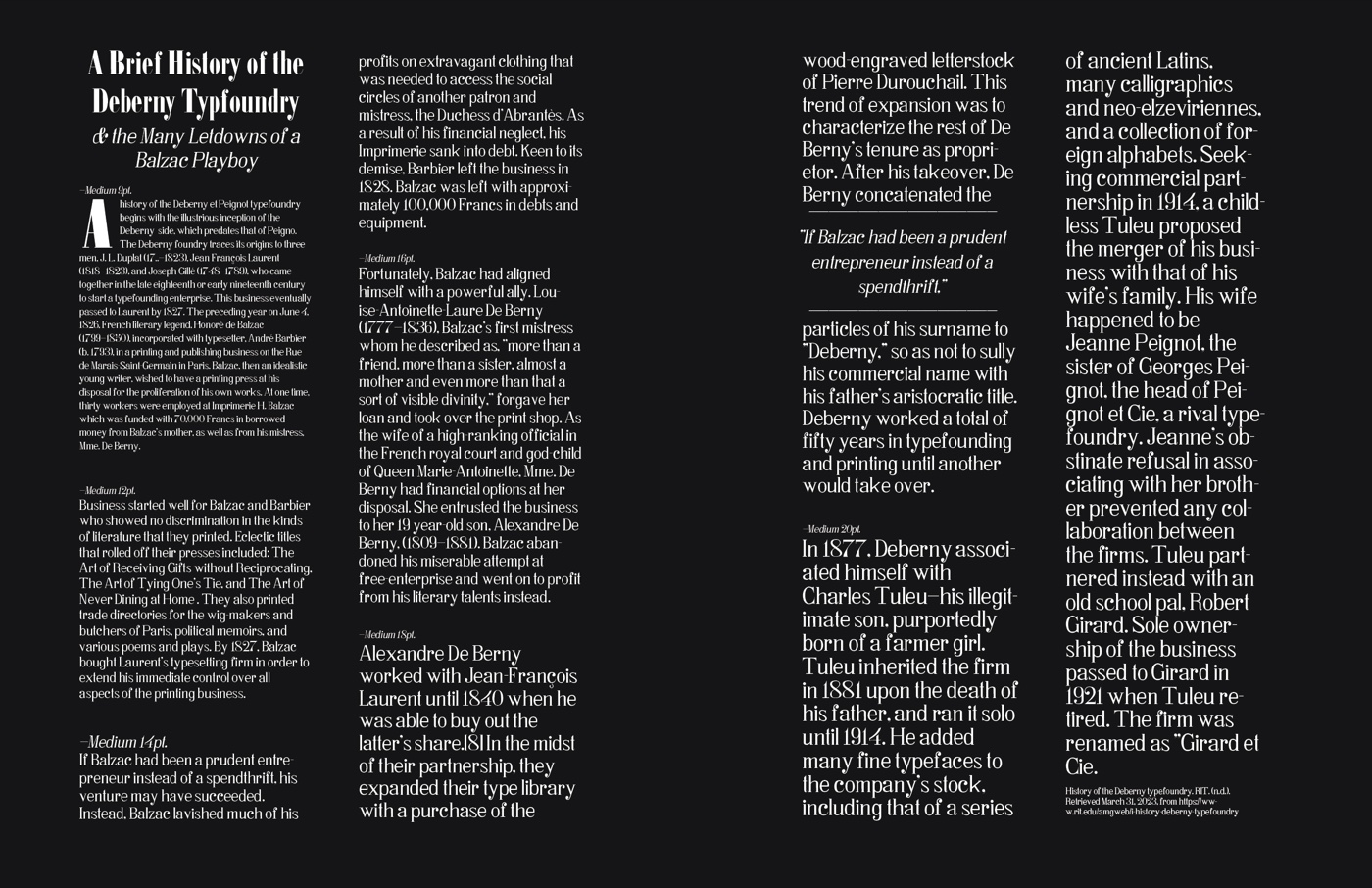
A history of the Deberny typefoundry, set in Balzac from 9 to 20 point.
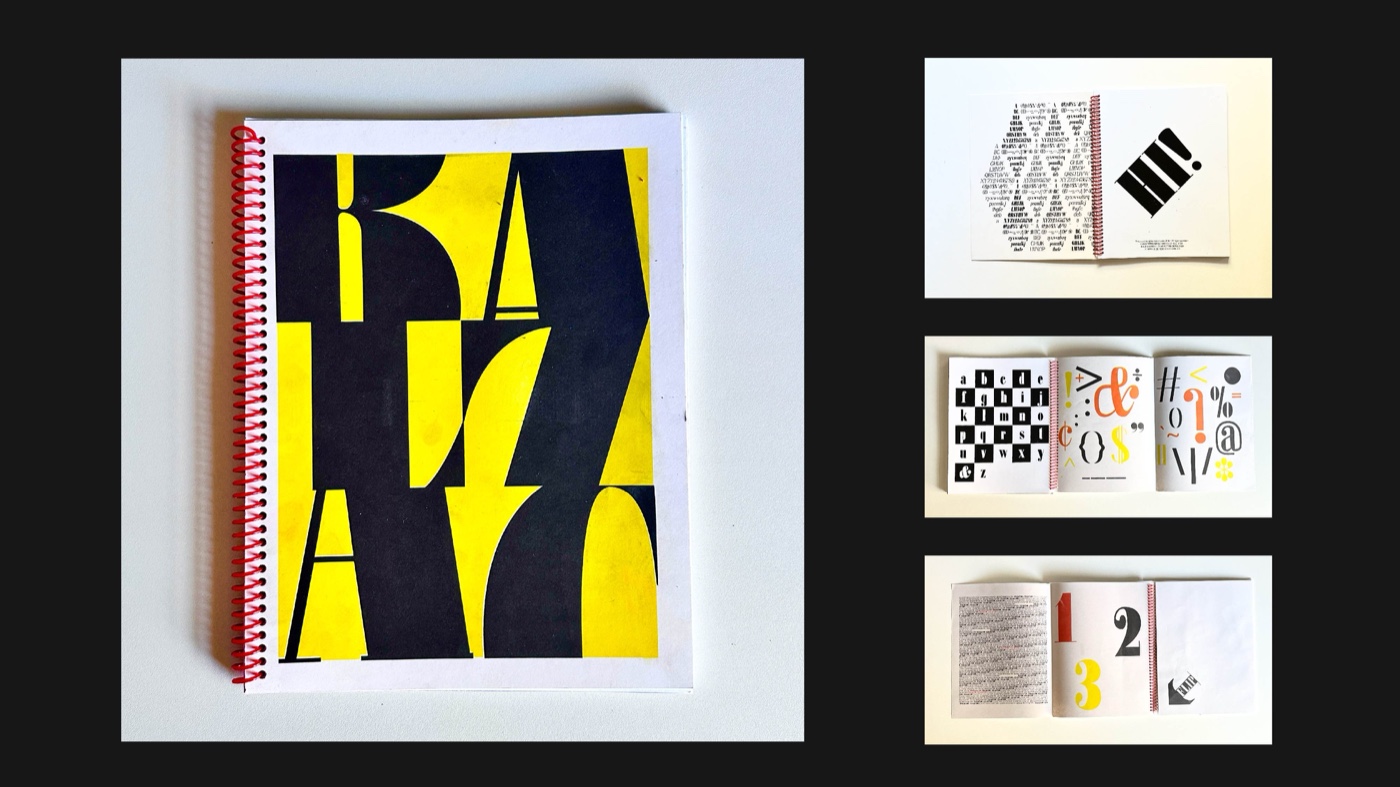
The process book,
in Letterform Archive’s
permanent collection
Printed on a risograph and spiral bound. Three copies exist, and one of them is held in the archive in San Francisco.
Interpolating the weights
Pulling a capital A from Deberny Medium through to Balzac Black Italic.
In print